

Stylophorum diphyllum commonly called the celandine poppy or wood poppy
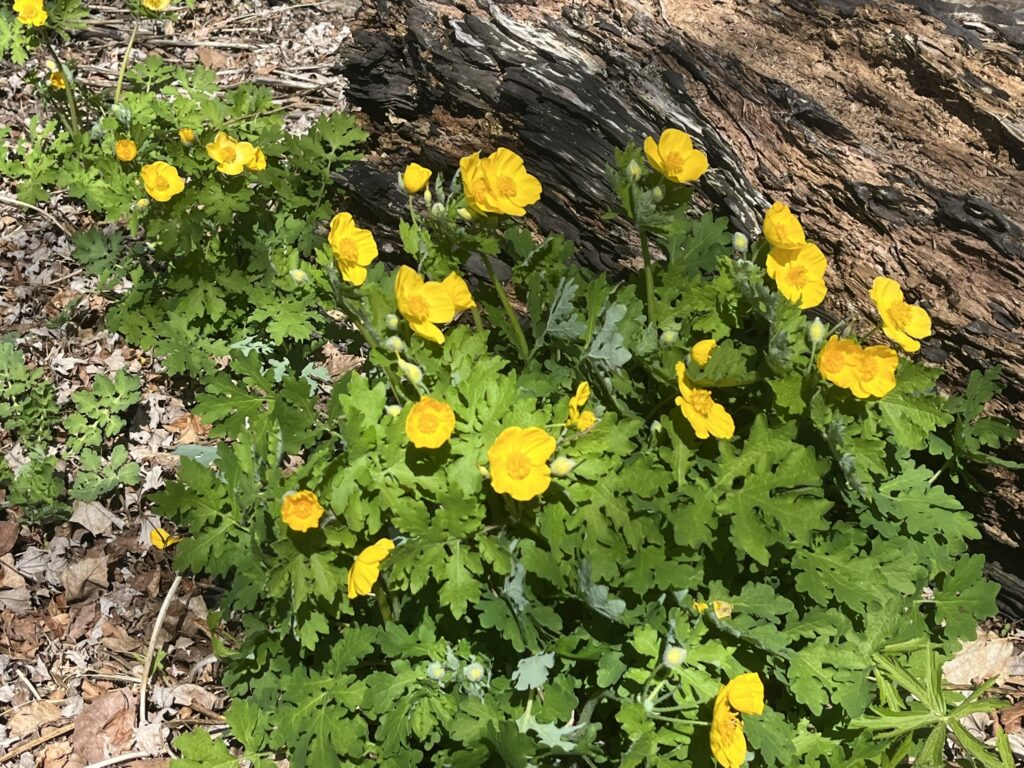

Patch of celandine poppy growing in the shady side garden – 4/23/26 (DEWhite)
Its typical natural habitat is moist forests. It is occasionally cultivated for its bright yellow flowers. The common name is derived from greater celandine (Chelidonium majus), a closely related, but invasive, European plant with similar flowers and leaves. Stylophorum diphyllum is an herbaceous perennial. It grows to about 1.5 feet (0.46 m) tall, from underground rhizomes. Leaves are pinnately cut and lobed. They grow from the base of the plant, and in a pair at the top of the flowering stems.
In spring, the deep yellow flowers of the celandine poppy appear as a brilliant display on the forest floor. The flowers have 4 yellow petals, two soon falling sepals, many yellow orange stamens, and a single knobby stigma. They appear singly or in umbels of two to four flowers from early spring to early summer. The flowers issue from between a pair of leaves at the top of the flowering stems. They produce pollen, but no nectar. After fertilization, a bristly blue green pod hangs below the leaves. Seeds with white elaiosomes ripen in midsummer and the pod opens by four flaps. The seeds are eaten by chipmunks.